View Bio View Video Intro View Photo Gallery
Cheryl Lewis is a member of the Tennessee Association of Woodturners and was president of Gold Country Woodturners in Northern California prior to that. She has been a demonstrator multiple times for Woodturners Worldwide International online symposia and has demonstrated for many clubs around the nation. She also paints woodturned forms using an ancient method using pigmented molten beeswax. She has long been a member of the American Association of Woodturners Board Selection Committee and has written an article in American Woodturner magazine. She is a repeat instructor of woodturning and art at John C. Campbell Folk School in North Carolina.
Adapted Platter
Elements of basic turning and form will be thoroughly discussed as an adapted platter is turned on the lathe. The platter created during my turning demo will then be carried into my next demo to be painted with molten, pigmented beeswax. For this reason, the platter design will include raised sections to highlight areas of emphasis for painting. Areas to be painted require no sanding so that beeswax will best adhere to the wood; only tool marks must be minimal.
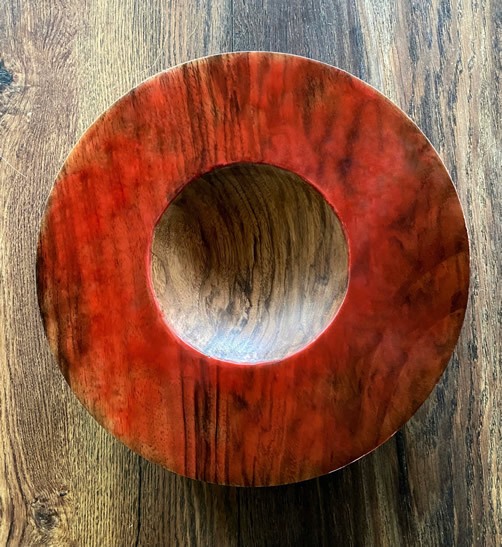
Bees & Trees platter
The platter turned in my earlier demo has been adapted with areas of emphasis to highlight molten beeswax painting, an ancient process (and some say original pigment binder). Many painting options and supplies will be discussed. Once painted, the platter will be returned to the lathe to create crisp lines. Also, a specialized jam chuck will aid in tenon removal.
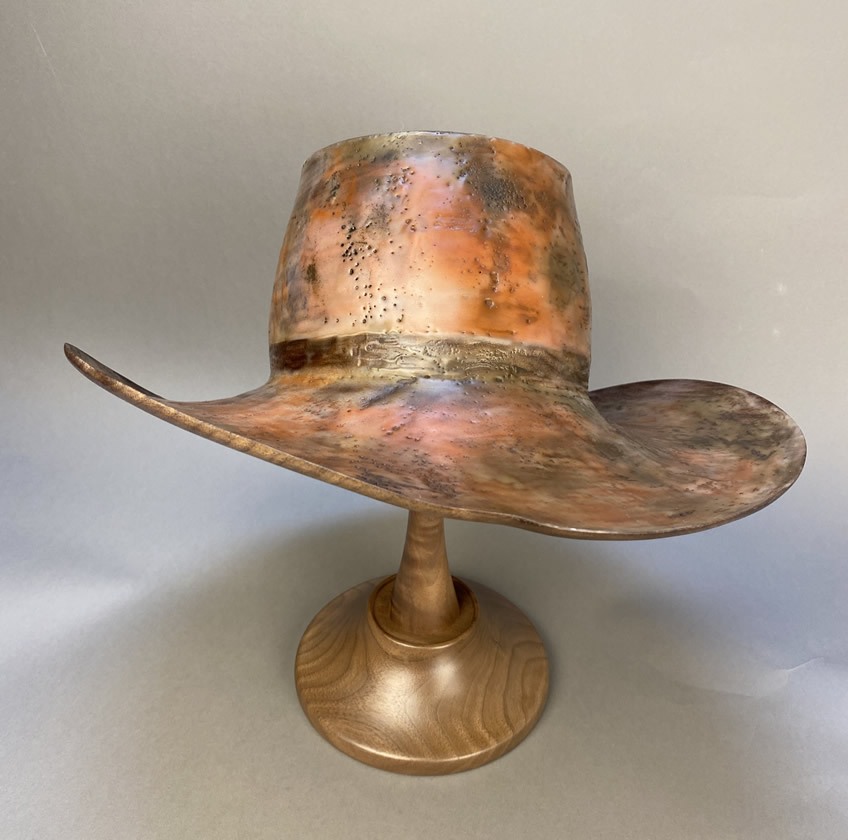
Bees & Trees cowboy hat
Special molten beeswax painting will be demonstrated on a Jim Williams (Canada) woodturned cowboy hat to achieve the look of seasoned leather. This process includes the use of varied embellishment tools and techniques, as well as the application of significant heat. It is necessary to fuse each layer of the wax to the wood. This process has played an important role in producing timeless pieces that continue to exist since the 5th century.
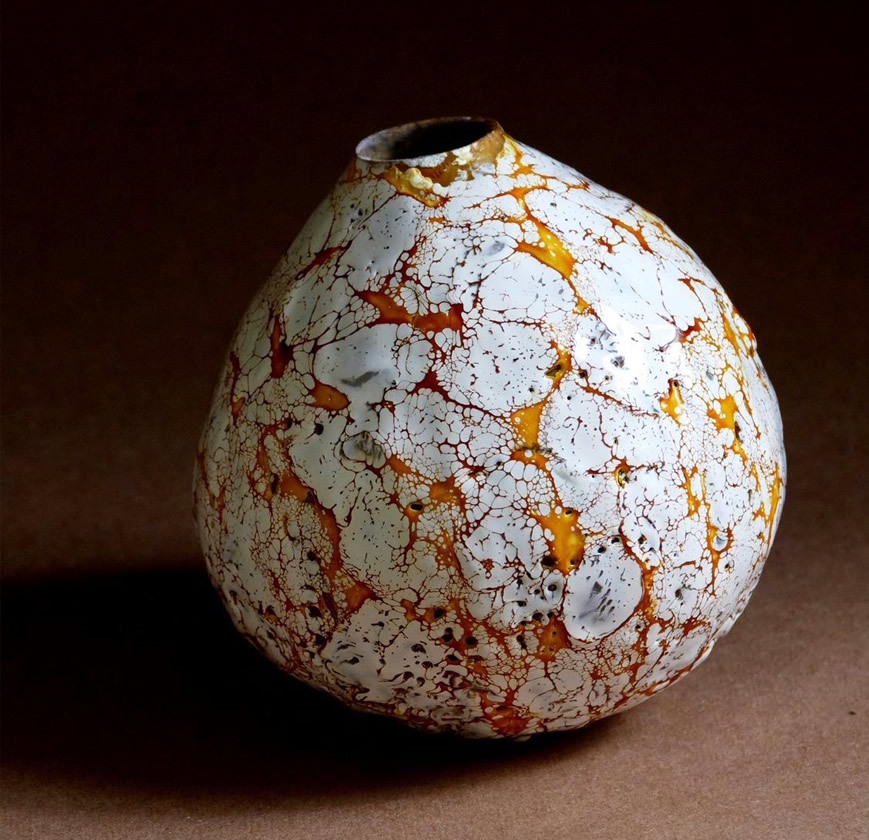
Bees & Trees hollow form
Special molten beeswax effects will be demonstrated on a John Jordan original hollow form. Plenty of turners decide to discard pieces when their journey has failed for one reason or another; one of the many benefits of molten beeswax painting is errors can be turned into strengths, concealed and beautifully embellished. The many ways to accomplish this will be shown and discussed.
Cheryl’s 2026 FWS photo gallery:
Click an image to display a larger version, then use the arrows to scroll through them: